varsha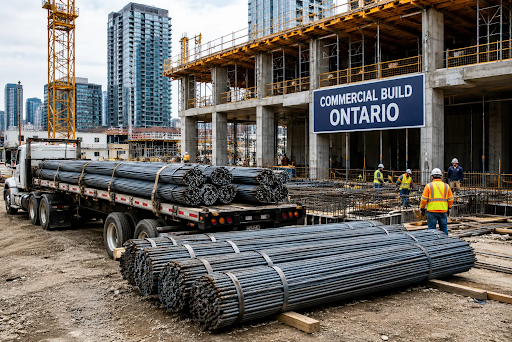
Commercial construction projects depend on consistent material coordination from the earliest stages of development through concrete placement and structural completion. Reinforcing steel plays a critical role in foundations, slabs, retaining systems, parking structures, and infrastructure work, making supplier reliability an operational priority for contractors across the province.
For procurement managers and commercial builders, selecting a dependable Rebar Supplier Ontario partner involves more than comparing prices. Delivery coordination, fabrication accuracy, inventory availability, and regional support all affect project timelines and construction efficiency.
Province-Wide Delivery Capacity Matters
Large commercial builds rarely operate on flexible schedules. Concrete crews, forming teams, inspection timelines, and equipment rentals all depend on reinforcing steel arriving on time and in the correct quantities.
Ontario construction projects also vary significantly by region. Urban developments in the Greater Toronto Area face different logistical conditions than infrastructure or industrial projects in Northern Ontario or Southwestern manufacturing corridors. Suppliers that can coordinate deliveries across multiple regions are often better positioned to support long-term commercial work.
Contractors evaluating an Ontario reinforcing steel supplier typically look for:
- Reliable transportation coordination
- Consistent delivery scheduling
- Capacity to handle phased shipments
- Support for multiple active project sites
- Familiarity with municipal and commercial construction timelines
Delays in reinforcing steel delivery can affect sequencing across several trades. Because of this, commercial procurement teams often prioritize suppliers with demonstrated experience managing high-volume deliveries under tight schedules.
Fabrication Accuracy Supports Construction Efficiency
Commercial rebar supply is closely tied to fabrication precision. Inaccurate cuts, labeling issues, or missing bundles can create unnecessary slowdowns once materials arrive on site.
For large projects, contractors generally prefer suppliers with established quality control systems and detailed fabrication processes. Shop drawings, bar tagging, bundle organization, and staging coordination all contribute to smoother installation and reduced on-site confusion.
This becomes especially important for projects involving:
- Multi-level concrete structures
- Industrial foundations
- Infrastructure reinforcement
- Custom reinforcing requirements
- High-volume concrete pours
Procurement managers often assess whether suppliers can maintain consistency across repeated orders and phased construction schedules. A supplier capable of delivering organized, fabrication-ready materials can reduce labour inefficiencies and improve installation productivity.
Inventory Reliability and Commercial Project Support
Construction timelines are often affected by changing project scopes, weather conditions, or accelerated scheduling demands. Suppliers that maintain dependable inventory levels are better equipped to respond when contractors require additional material or revised quantities during active construction.
When comparing suppliers, many builders evaluate whether the company has the operational scale to support both planned procurement and unexpected project adjustments. This is especially relevant for firms managing multiple commercial builds simultaneously.
Contractors searching for a dependable Rebar Supplier Ontario partner often prioritize suppliers with province-wide capabilities, established fabrication operations, and experience supporting commercial construction timelines across different project types.
A construction steel supplier that understands commercial scheduling pressures can help reduce disruptions during critical project phases. This level of support becomes increasingly valuable on infrastructure, institutional, and large-scale private developments where material coordination affects several downstream trades.
Communication and Scheduling Coordination
Reliable communication is another major factor in supplier selection. Procurement teams and site supervisors need clear visibility into delivery timelines, fabrication status, and shipment sequencing throughout the project lifecycle.
Suppliers that maintain strong coordination practices can help contractors manage:
- Concrete pour scheduling
- Site storage limitations
- Crane and equipment planning
- Traffic and delivery restrictions
- Last-minute material adjustments
Commercial projects often involve changing timelines and overlapping subcontractor activity. Suppliers that respond quickly to scheduling updates or revised fabrication requirements are generally easier to integrate into active construction environments.
In Ontario’s commercial construction sector, coordination between suppliers and field operations has become increasingly important as projects grow larger and more schedule-sensitive.
Long-Term Supplier Relationships Reduce Procurement Risk
Many contractors prefer building long-term relationships with reinforcing steel suppliers rather than sourcing materials on a project-by-project basis. Consistent supplier partnerships can improve forecasting, streamline procurement processes, and reduce uncertainty during active construction phases.
An experienced commercial rebar supply Ontario provider may already understand a contractor’s scheduling expectations, preferred delivery structure, and fabrication requirements from previous projects. This familiarity can simplify coordination and reduce administrative delays.